Begin with Cheyenne materials and the kind of soil present
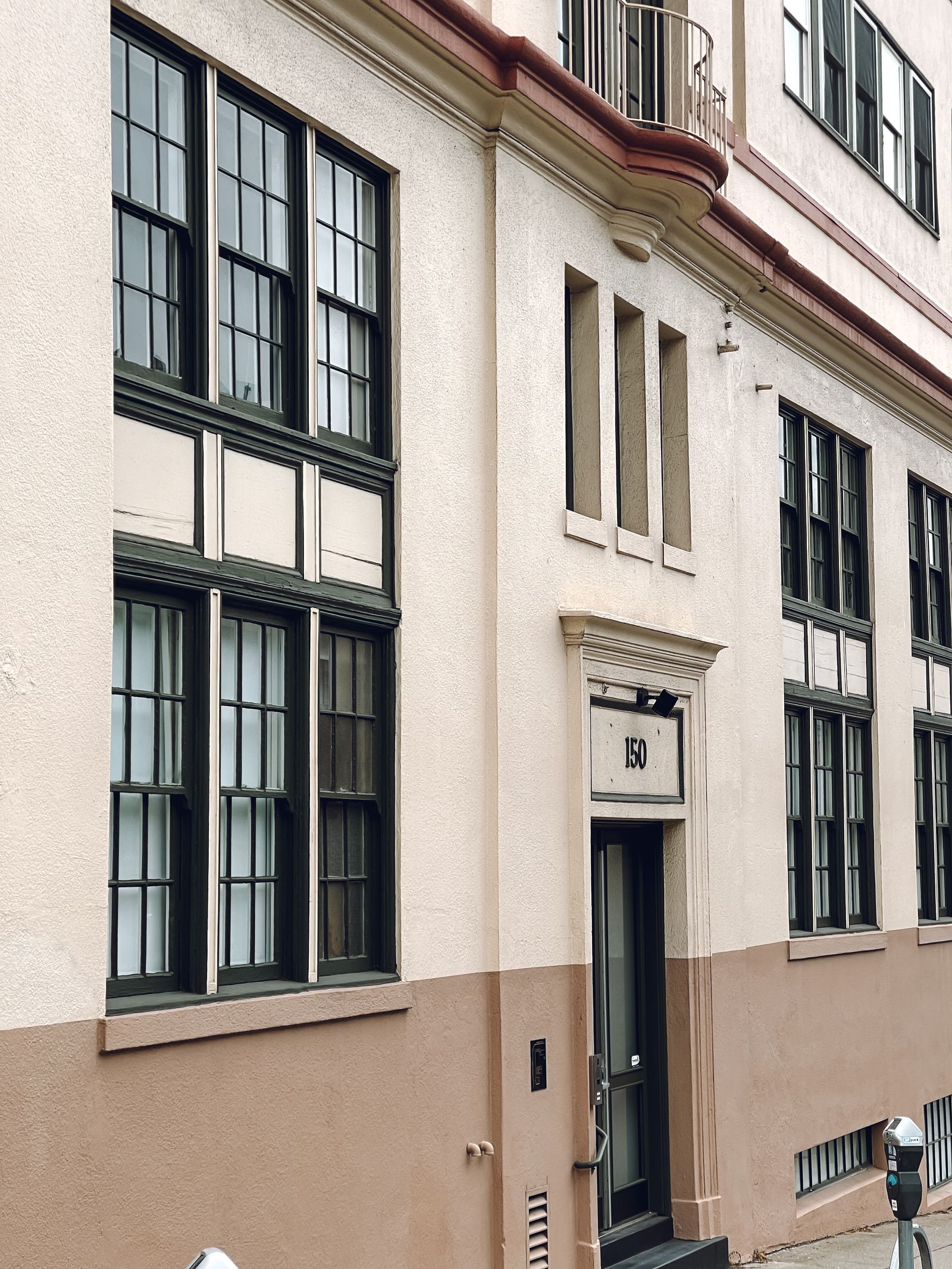
Cheyenne commercial buildings often combine brick and mortar, precast or poured concrete, stucco, EIFS, painted metal, insulated panels, stone, storefront glass, awnings, signs, and roof-edge details. A downtown property may place older masonry beside renovated glazing. A retail building on Dell Range may have broad sidewalks, monument signs, parking islands, drive-through lanes, and multiple tenant entries. A warehouse or service facility near the Union Pacific corridor, West Lincolnway, or the airport may have dock doors, truck movement, security fencing, rooftop equipment, and large metal elevations. One pressure setting and one product should not be assumed to fit all of those zones.
Soft washing may suit compatible organic growth, pollen, bird residue, and some atmospheric film when the tested material, solution, dwell time, rinse, and protection plan are appropriate. A dark mark may instead be oxidation, mineral deposit, exhaust film, road salt, embedded dust, failed paint, a roof-edge streak, or a recurring water path. A representative test area can help separate likely cleaning from restoration or repair. Routine washing does not correct open mortar, cracked stucco, failed sealant, spalled concrete, corrosion, active leaks, damaged coatings, or defective drainage. The proposal should describe expected improvement and keep those items visible as separate work.
- Separate brick, mortar, concrete, stucco, EIFS, glass, metal, stone, and coated areas.
- Distinguish organic growth from dust, deicing residue, mineral deposits, oxidation, and water streaks.
- Use representative test areas when material history, coatings, or prior repairs are uncertain.
- Keep facade repair, leak diagnosis, restoration, glass polishing, and coating replacement outside routine washing.
Shape the scope around local corridors and occupied properties
Downtown Cheyenne properties near Capitol Avenue, Carey Avenue, Lincolnway, and the Depot Plaza area may share sidewalks with restaurants, offices, civic activity, hotels, and event traffic. The work plan should preserve accessible paths, business entries, fire access, deliveries, and any planned public activity. A historic-looking facade may also have aging mortar, delicate details, or coatings that need close inspection before water is applied. A phased elevation plan can keep one entrance or sidewalk section available while another zone is being treated.
Dell Range Boulevard and the city's retail corridors can bring high vehicle turnover, storefront glass, signs, shared parking, landscaped islands, curb lines, and multiple tenants into one cleaning scope. Early or after-hours work may reduce conflicts, but it still needs a handback plan for customers, employees, delivery drivers, and accessible routes. Properties along Lincolnway and West 20th Street may combine offices, medical practices, restaurants, and service businesses. Identify patient or guest doors, air intakes, outdoor seating, cameras, and the times when a quiet phase is possible.
Warehouse, light-industrial, airport-adjacent, and contractor properties often have more room for staging but more complicated service access. Truck turning areas, loading docks, gates, equipment, dust, security requirements, and shift changes may matter more than the public sidewalk. The address supplies context, but the facility contact should identify the elevations, doors, drainage points, and operating constraints that control the sequence. Neighborhood names are useful for orientation; they are not assumptions about a particular tenant or contract.
Schedule around wind, snow, sun, and freeze-thaw movement
Cheyenne's High Plains conditions can change the cleaning window quickly. Wind affects overspray, hose lines, barriers, plant protection, aerial stability, and the movement of water across pavement. Snow and deicing material can collect around stairs, ramps, garage walls, dock approaches, and lower facade bands. Strong sun and dry air can alter evaporation and dwell time, while shaded north-facing masonry can remain wet longer. A forecast that looks workable in the morning may be unsuitable after a wind increase, storm cell, sudden temperature drop, or changed pedestrian pattern.
Freeze-thaw conditions deserve a condition check before rinsing. Open joints, loose coatings, cracked stucco, spalled concrete, failed sealants, and damaged parapet details can admit water or worsen when temperatures fall. Water left on a sidewalk, ramp, loading lane, or sloped drive can create a slip or icing concern. The work order should include pause and reschedule triggers for high wind, lightning, snow, ice, cold temperatures, poor visibility, and unexpected flow. A weather window is part of the scope, not a promise that a calendar date overrides conditions.
Recurring darkening may point to a downspout, parapet, flashing, irrigation head, roof edge, planter, or open joint rather than an inadequate wash. Cleaning can improve the appearance and document the visible water path, while roofing, envelope, plumbing, or drainage work remains with the appropriate trade. A maintenance interval should follow resoiling, dust exposure, winter conditions, event schedules, and the property's appearance priorities instead of assigning every Cheyenne building the same frequency.
- Review wind, lightning, precipitation, surface temperature, snow, ice, drying time, and visibility before each phase.
- Protect lower walls and entrances from winter salt, runoff, and re-wetting during the sequence.
- Check roof edges, gutters, downspouts, joints, canopies, and low walls for repeat wetting.
- Agree on weather pauses before staging hoses, barriers, lifts, or aerial equipment.
Plan access, staging, and aerial work before the first rinse
Before solution or rinse water is applied, map customer and employee doors, accessible paths, loading areas, air intakes, cameras, electrical equipment, signs, landscaping, vehicles, outdoor seating, fire lanes, and emergency routes. A medical or office building may need a continuous patient and visitor path. A downtown storefront may need a compact pedestrian detour. A retail center may need its most visible entry open. A warehouse may need dock doors and truck circulation protected from hose crossings, splash, and temporary barriers.
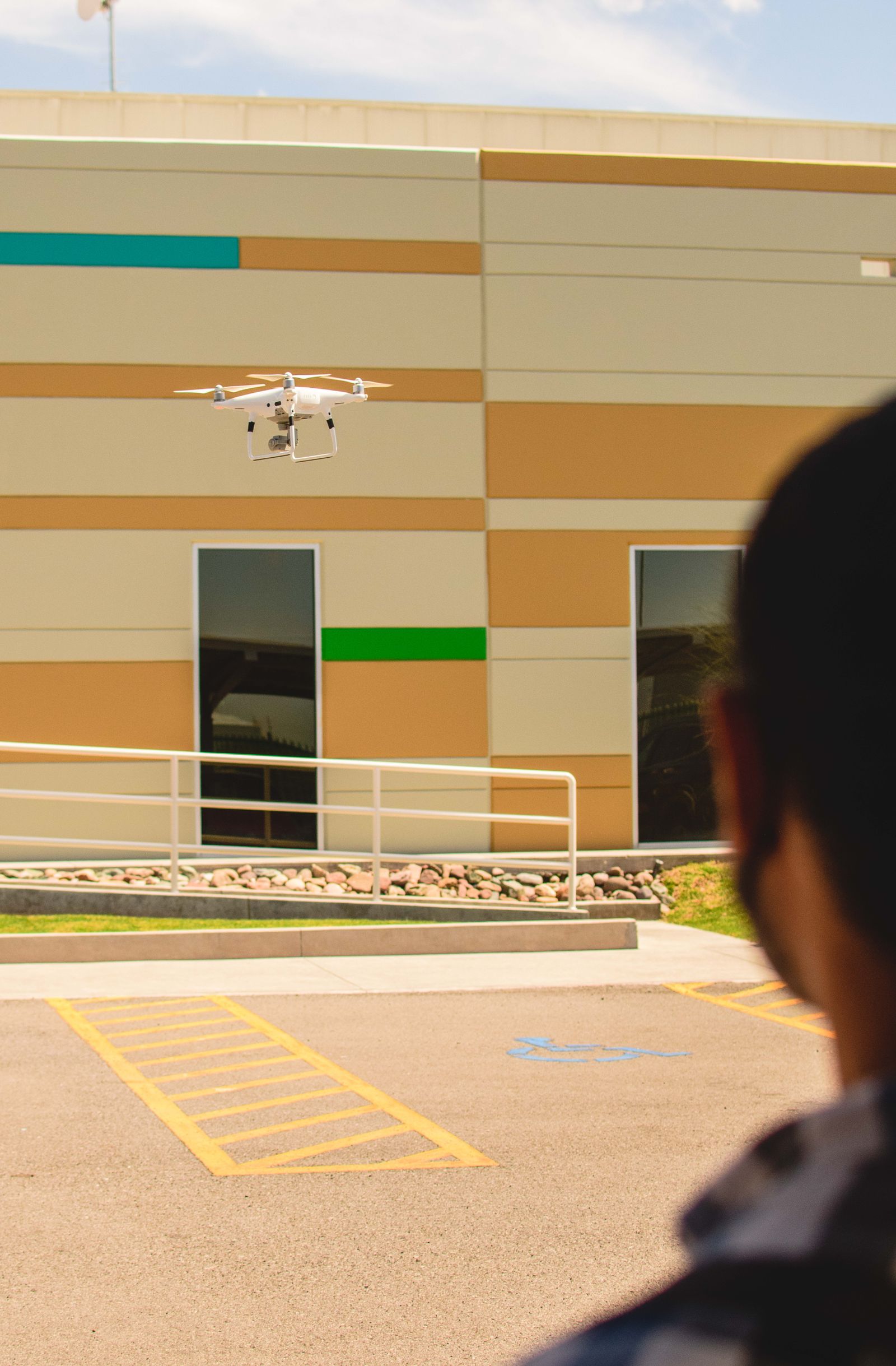
Aerial assistance may support a broad upper facade when wind, stand-off distance, airspace, launch and recovery space, visual control, hose management, and a protected ground zone all work together. It is an access and delivery tool, not a promise of hand-cleaned glass, bonded-deposit removal, uniform contact detail, or a particular finish. Cheyenne sites can include utilities, airport activity, roof units, signs, trees, narrow sidewalks, active yards, and neighboring operations. Commercial operators must follow applicable Federal Aviation Administration requirements; property permission does not replace aviation rules or required authorization. If the ground zone or weather cannot be controlled, a pole, lift, roof-access, hand-detail, hybrid, or rescheduled approach may fit better.
A quote should identify water access, hose routing, barriers, spotters, security, staging, emergency access, and the person authorized to pause work. Photos or notes of representative pre-work conditions, completed elevations, remaining deposits, and visible damage give the facility team a useful closeout record. When a building is active, the customer is buying predictability as well as a cleaner facade, and the plan should show how both are being protected.
Treat Cheyenne runoff as part of the cleaning decision
Cheyenne's stormwater and sanitary sewer systems are separate. Stormwater can move through curb inlets, catch basins, underground pipes, open channels, detention areas, and drainage routes toward local waterways. A visible inlet is not automatic permission to send treated water into it. The cleaning plan should consider the products used, soil load, rinse volume, slope, drain type, landscaping, low points, and property requirements. Depending on the site and scope, controls may include diversion, collection, recovery, reduced rinse volume, filtration, plant protection, disposal, or coordination with the responsible authority.
During the first rinse, watch whether water moves toward a garage ramp, under a door, across a shared retail lane, into a landscaped swale, or toward a neighboring parcel. Wind and a changing storm can make the observed route different from a dry inspection. The crew should pause when flow no longer matches the plan and keep public paths, hose crossings, and wet pavement controlled. A property contact should identify catch basins, detention features, low spots, and restricted discharge areas before setup.
Runoff review can also reveal a recurring building issue. A parapet cap, downspout, planter, irrigation spray, roof edge, or failed joint may explain why one elevation resoils faster than another. The quote should distinguish visible cleaning from envelope, roofing, plumbing, or drainage investigation so the owner knows what the cleaning will improve and what needs another professional.
Request a Cheyenne quote with useful property information
For a productive quote, send the address, building use, approximate height, facade materials, priority elevations, visible conditions, desired timing, operating hours, water access, nearby drains, access restrictions, and any known leaks, loose material, coating failure, or previous cleaning damage. Photos of the primary entry, shaded wall, upper elevation, roof edge, windows, loading area, landscaping, and parking-side drainage help the review. Mention whether the goal is an event-ready appearance, tenant turnover, recurring maintenance, sale preparation, or improvement of one recurring stain.
To discuss a Cheyenne property, call +1 239-351-2897 or email contact@dronebuildingcleaners.com. Drone Building Cleaners can help evaluate whether soft washing, controlled pressure, aerial assistance, contact detail, or a hybrid method fits the building. The resulting scope should be specific about elevations, access, protection, weather, drainage, limitations, and work that belongs with another trade. That is how a facilities team gets a usable quote instead of a generic promise to wash the building.